
Interestingly enough, today I had the urge to write a blog post. Since my last post, my blog moved so far out of focus that I completely forgot to update it when I changed my TLD late last year. But here I am, back with new thoughts and experiences on tech, software, homelabs and, last but not least, AI. The last two years have brought many changes in this space, especially since agents are now able to write complete software projects that “work”. It’s cool to have such tools, but it also means that there’s much more slop, and carefully crafted software is much harder to find. But that’s a topic for another blog post. Okay, now that I’m back with a new website and all, I also intend to continue working on Jellyflix (my cross-platform Jellyfin client). I’m also working on a completely new platform that I’m personally very excited about, but that probably nobody is going to use: Jellyflix for Apple Vision Pro. More on that later. First, some thoughts on VR.
My journey with VR so far
So, I had a Pico 4 when it came out, and my experience was mixed. I liked playing Beat Saber via ALVR, but the connection problems and overall comfort weren’t great. The standalone games were mostly meh at best. The displays of the headset (2160 × 2160 pixels1) were okay, but the hardware’s processing limitations were real. Assets didn’t have enough detail, and textures were too low-res. To make matters worse, my skin gets irritated really fast and I get slightly motion sick (which could also be due to stuttering and low framerates). Unsurprisingly, I didn’t wear the headset very often and avoided it whenever I could, despite loving stereo 3D and all. When Apple released the Vision Pro in early 20242, I was really hyped about the product because they seemed to have an answer to everything I didn’t like about my headset at the time: higher-resolution OLED displays, no controllers, just intuitive eye tracking and pinching, a concept for non-gaming use cases, and the best passthrough on the market (I’m sometimes still amazed at how great it is). But when they announced the price, it brought me back down to earth. There’s no way I would pay that much for a VR headset, especially since my previous experience had been so mediocre. That’s where my enthusiasm for the device essentially ended, but I remained curious.
Enter SadlyItsBradley (Brad Lynch). I think one of his videos got randomly recommended to me, and when I saw how he used the device, it clicked: this is a “dev kit” and a spatial computer, not a typical gaming VR headset. So the fire was burning again, and I followed what other devs were doing on the device, what’s generally possible on this new computing platform, and so on. Early this year, I finally decided to pull the trigger and bought one. Not at full price, though (I’m still not rich), but a used M2 model. On that note: thank you, Apple, for releasing the M5 version. I still think nobody really need the upgrade, but it brought prices down significantly on the used market.
The crazy part is that I now use the AVP almost daily for media consumption, work, development and sometimes even gaming. I still had to deal with the skin irritation and the obvious weigh t problem. For your enjoyment, here’s a quick i llustration of why Apple’s original Solo Knit B and is bad:

I switched to a halo-style strap and removed the light seal. This has three main benefits: First, the FOV is no longer an issue. It’s like wearing glasses with a very thick frame, and the passthrough further helps with this illusion. Second, my skin doesn’t get irritated anymore. And third, the weight is much better balanced. It doesn’t sit as securely as with the light seal, though. As a bonus, it also makes sharing way easier, and people feel more connected to their surroundings.
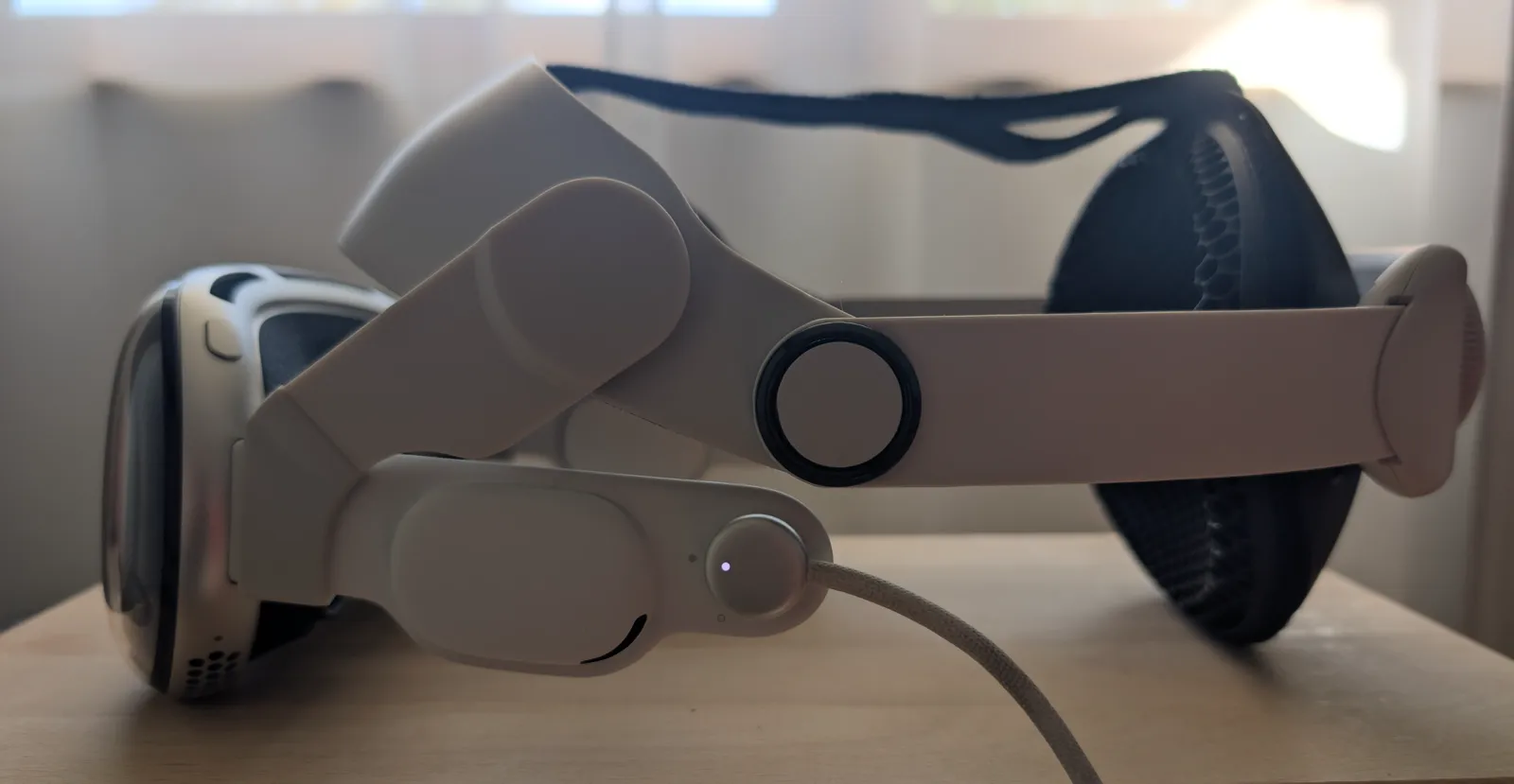
I’m very excited about where spatial computing is going right now, and it’s cool to see new products entering the market, like the Steam Frame, Meta’s VR glasses and, in the future, the URXR. I really like seeing others build and try out new stuff that’s never been done before, and being part of this development is just awesome.
Great links this week
- A good first-impressions video of Meta’s VR glasses. I don’t like Meta as a company, but the hardware is really impressive and would fit my workflow perfectly. Plus, it’s good to see another competitor for the Vision Pro.
- Two hours of rambling by SadlyItsBradley. He has a lot of insights and generally good opinions on spatial computing. It’s especially interesting to see how well livestreaming to platforms like YouTube with the Vision Pro already works.
- Anthropic is lowering prices for Claude Opus 5.5. Competition in the AI space seems to be heating up, which is cool, I guess.